


rights@dukaj.pl
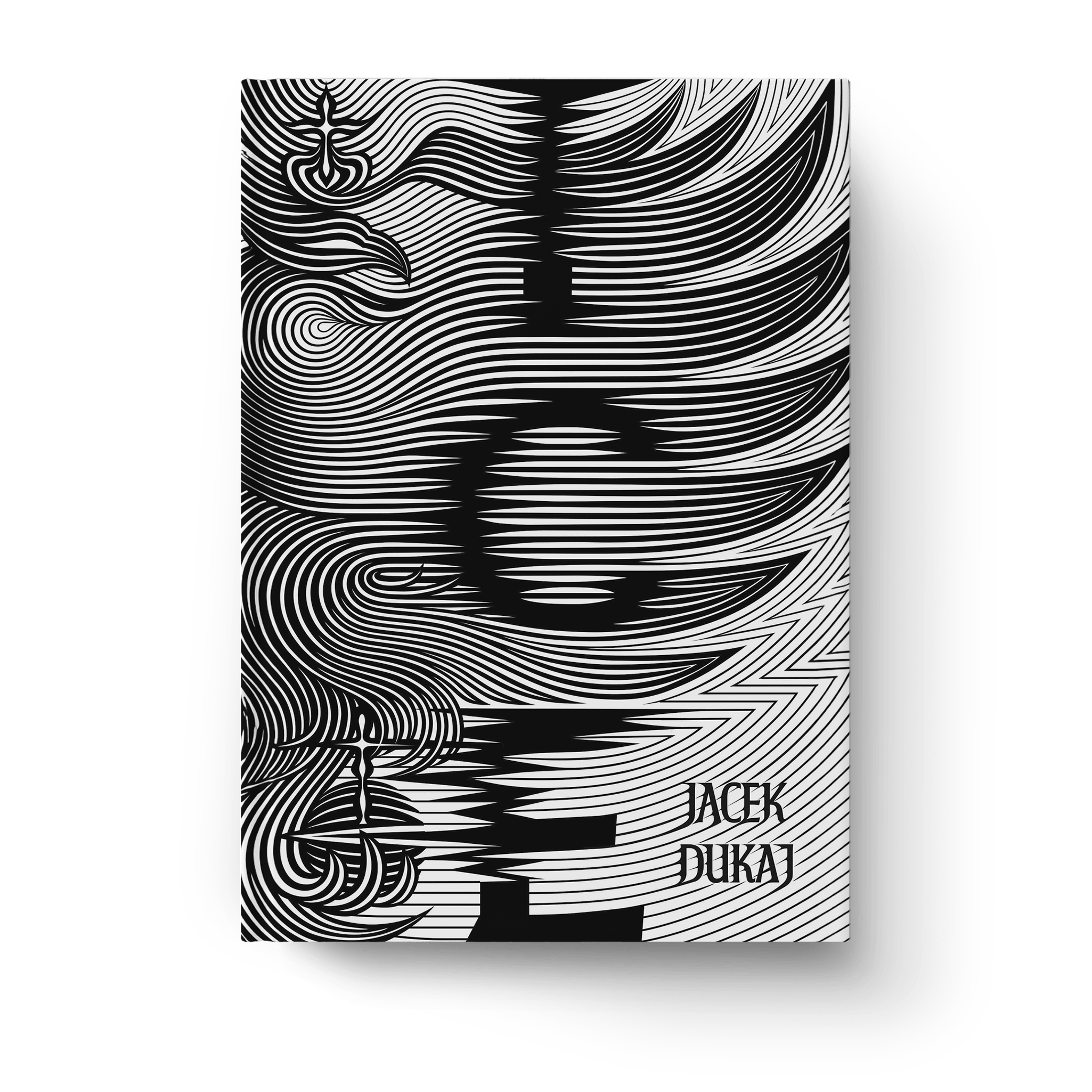
Ice
The most frequently awarded and translated novel by Jacek Dukaj
The story of Ice takes place in an alternative reality in which World War I never happened. It’s 1924 and the Congress Kingdom of Poland remains under the rule of the Tsar and in the Belle Epoque. Warsaw is icebound. Snow storms bury the roads in the middle of summer. Gleissen – unearthly angels of Frost – walk the streets of the city, freezing truth and lies…
Benedykt Gierosławski, a talented mathematician and incorrigible gambler, is sent on the Transsiberian Express to the icebound Irkutsk by the Tsar’s Ministry of Winter. From there he is to set off to search for his father, seemingly able to communicate with gleissen.
Ice shows a world changed at the level of logic: Winter is ruled by the two-valued logic, Summer – by a three-valued one. This change brings consequences on all levels of the presented world and the text of the novel, from the physics to the law, from psychology to religion, to a special form of narration.
The novel has won awards, e.g. the European Union Prize for Literature and the Magnesia Litera.
Book details
2689768 characters
/
Hardcover
/
16.64 x 5.46 x 24.13 cm
Ist edition
/
Bloomsbury Publishing
/
2025
Should anyone have a hankering for some postmodern speculative fiction that deals with weighty topics such as philosophy, imperialism and quantum physics, then they need look no further. Ice by Jacek Dukaj, translated by Ursula Phillips has all that and more in its 1,100-plus densely typeset pages.
Financial Times
Capacious, packed with invention and incident, set in a baroquely detailed world with a brilliantly chilly atmosphere, and featuring stimulating metaphysical exposition and kinetic and thrilling set pieces, this is a marvellous ice-palace of a novel.
The Guardian